


Eric Eisner: Building a Career in Public Service and Communication

Sitting down with Eric Eisner to learn more about his journey as Chief of Staff for Representative Soter and the Director of Communications for the Worcester's Country Sheriff’s Office.
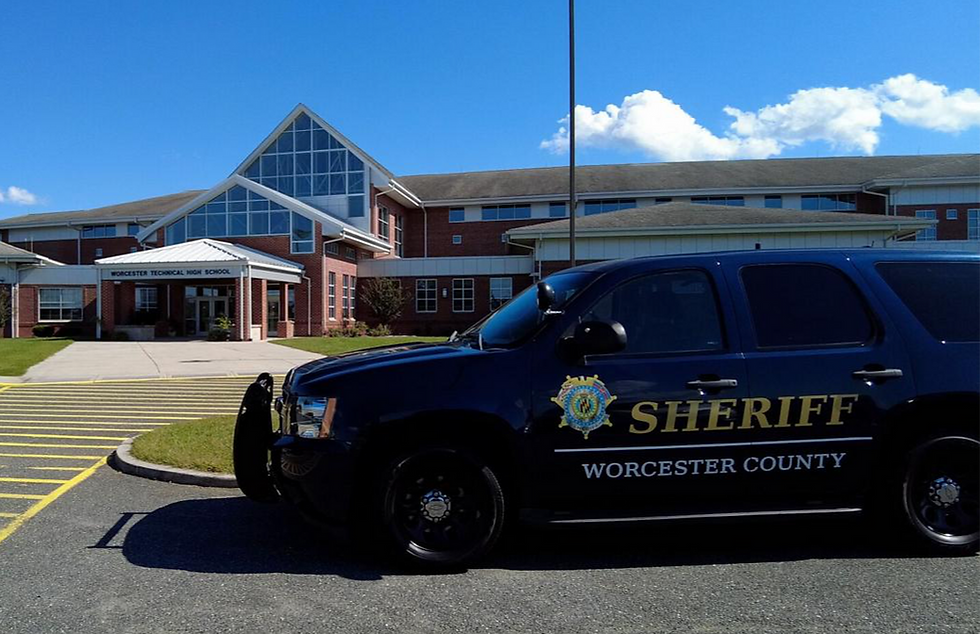
Eric Eisner’s career path is a reminder that the most meaningful professional journeys are rarely linear. Currently serving as the Director of Communications for the Worcester County Sheriff’s Office and a member of the Blackstone Valley Hub board, Eisner has built a career that blends public service and strategic communication. His work places him at the intersection of government operations, community engagement, and public accountability. Yet, like many professionals working “inside the arena,” Eisner’s path into this role unfolded gradually: shaped by opportunity, curiosity, and a willingness to step into unfamiliar environments.
Career Pathway
Eric Eisner did not initially envision himself working in government communications or even in law enforcement. In fact, his early plans pointed in a completely different direction.
Growing up in Blackstone, Eisner attended the University of Massachusetts Lowell, where he began his studies in business before shifting toward environmental science. At the time, his goal was to pursue environmental law. But halfway through his junior year, an unexpected opportunity altered the trajectory of his career.
“I was approached by somebody who was running for state representative,” Eisner recalled. “He said, ‘Hey, have you ever worked on a campaign?’ And I said, ‘No, not really.’ But I had some writing skills, some media skills, and he kind of took a chance on me.”
That single conversation opened the door to politics and public service.

Eisner joined the campaign team and helped with communications and media efforts. When his candidate won the election, Eisner stayed on as a staff member, working in the State House while completing his college education. Over the next three and a half years, he gained firsthand experience with the inner workings of government.
After several years in the legislature, another opportunity emerged: this time in a setting he never expected. When a communications role opened at the Worcester County Sheriff’s Office, Eisner made the transition. Walking into the facility for the first time, he admits he paused to take it all in.
“I walked out the first day, looked back at the barbed wire fences and the big gates, and thought, ‘I’m not sure how I ended up here,’” he said. “I never imagined working in this environment.”
Yet the role turned out to be a natural extension of the skills he had already developed: writing, communication, and storytelling.
“It’s been a really cool journey,” Eisner reflected. “I just never expected the path to take me here.”
Inside the State House
Eisner’s first real immersion into government came when he joined Massachusetts’ State Representative Sorter’s campaign and later served as Chief of Staff. The role placed him directly inside the day to day workings of state government. For three and a half years he helped manage constituent issues, communications, and policy preparation while learning how public service operates behind the scenes.
Much of that experience took place during one of the most unusual periods in recent political history. The COVID-19 pandemic transformed what a legislative office looked like and what its staff were responsible for handling.
“We were dealing with people needing vaccines, unemployment help, health insurance, everything,” Eisner explained. “You think community service is going to an event or volunteering somewhere, but during COVID it was often just answering the phone and helping someone who didn’t know where else to turn.”
Sometimes the assistance was practical. The office helped residents track down delayed unemployment checks, navigate health insurance systems, or connect with state agencies that were overwhelmed by the sudden surge in demand.
“There were people calling who hadn’t spoken to anyone in weeks,” he said. “Just listening to someone on the phone was sometimes the community service we were providing that day.”

Experiences like these reshaped Eisner’s understanding of public service. Before working in government he imagined community service as something tangible such as volunteering at an event or supporting a charity. Working in a legislative office showed him that service can also mean helping individuals navigate complicated systems or simply giving someone the time and attention they need.
At the same time, the work extended far beyond responding to phone calls. Eisner helped prepare legislative language, coordinate meetings with stakeholders, and gather information from agencies and advocacy groups before bills were introduced. He began to see that much of the work that shapes public policy takes place far from public view.
“Something as small as choosing this word over that word can completely change the meaning of a sentence,” Eisner said. “If you are writing those sentences, you have influence over what the final policy looks like.”
This experience revealed a reality that many people outside government rarely see. While elected officials often become the public face of legislation, staff members play a critical role in researching issues, coordinating discussions, and shaping the language that ultimately becomes law.
“Behind the Scenes is where all the work gets done,” Eisner explained. “It does not always happen between nine and five. Sometimes it is eleven at night or five in the morning whenever something needs to be handled.”
Through those long hours and unexpected challenges, Eisner gained a clearer understanding of how government actually functions. Policy decisions rarely emerge fully formed. They are the result of collaboration, research, negotiation, and a large amount of unseen work carried out by teams of people who are committed to helping their communities.
Grounded in the Community
While much of the legislative process happens in offices and committee rooms, Eisner quickly learned that effective public service requires constant connection with the communities being represented. Working for State Representative Sorter meant spending just as much time outside the State House as inside it.
“There really wasn’t a typical day,” Eisner explained. “One day we might be in Boston, another day we’d be at a senior center, and another day we’d be somewhere else entirely in the district.”

The office regularly attended local events across the district. That could mean celebrating a student’s Eagle Scout ceremony, attending a grant announcement for a town project, or visiting community organizations that had received state support. These visits were not simply symbolic appearances. For Eisner, they were opportunities to see firsthand how policy decisions affected real communities.
Those experiences reinforced a lesson that is easy to overlook when focusing only on legislation. Public service is not only about writing policy or passing bills, it is also about building relationships and understanding what people in a community care about most.
Sorter placed a strong emphasis on this type of engagement. Eisner remembers that the philosophy of the office was simple: If you represent a community, you should spend time in that community.
“At the end of the day you’re the ambassador for those communities,” he said. “These are all good things happening where people live, and it’s important to be there and to recognize them.”
Communicating the Work of the Sheriff’s Office
When Eisner joined the Worcester County Sheriff’s Office as Director of Communications, the position placed him in a completely different environment - but one that still relied on many of the same skills he had developed while working in government.
Today, Eisner oversees communications for one of the largest county jurisdictions in Massachusetts. The Worcester County Sheriff’s Office serves communities across the entire county, from towns in the southeast such as Blackstone to communities farther west near Sturbridge and north toward Athol. In total, the office covers 60 cities and towns across the region.

The department operates the Worcester County Jail and House of Correction in West Boylston, a facility that houses roughly 700 inmates at any given time. Most individuals there are either awaiting trial or serving shorter sentences of two and a half years or less. While the sheriff’s office is technically a law enforcement agency, its responsibilities extend far beyond policing.
“We’re responsible for the care, custody, and control of the inmate population,” Eisner explained. “But we also focus heavily on reentry programs that help people successfully return to their communities.”
In his role, Eisner manages nearly every aspect of the office’s communications strategy. That includes handling media inquiries, writing press releases, producing videos and photographs, managing messaging, and working directly with the sheriff on special initiatives.
“It’s just me in the communications and marketing department,” he said. “So I do the writing, the photos, the videos, the media relations, really all of it.”
The position also requires coordinating with organizations across Massachusetts. Each county has its own sheriff’s department, but many efforts are aligned through the Massachusetts Sheriffs’ Association, which helps establish shared standards and facilitate collaboration between departments.
Through regular meetings and coordination across the state, departments can share strategies, align policies, and ensure that correctional staff are trained to similar standards while still allowing each county to tailor programs to the needs of its own communities.
“Just because something works in one county doesn’t mean it’s going to work the same way somewhere else,” Eisner noted.
For Eisner, the role blends communications, public service, and storytelling. Whether he is speaking with local reporters, documenting programs within the facility, or coordinating messaging across agencies, his goal remains the same: helping the public better understand the work happening behind the walls of the county correctional system.
Looking Ahead
As Eisner reflects on his career so far, one lesson stands out above the rest. Success in public service and communications is not defined by a single skill or academic path. Instead, it often comes down to work ethic, attitude, and a willingness to develop a wide range of abilities.
“Showing up every day, being positive, helping people, and going the extra mile really matters,” Eisner said. “If you’re not willing to hustle, someone else will.”
For students who are interested in careers in public service, law enforcement, or communications, Eisner also emphasizes the value of building diverse skills. Writing, design, photography, and media production all became tools that helped him stand out professionally. By combining those abilities with a strong work ethic and a commitment to learning, Eisner believes young people can position themselves to take advantage of opportunities when they arise.


Comments