


Empowering Students Through YouthWorks Signal Success

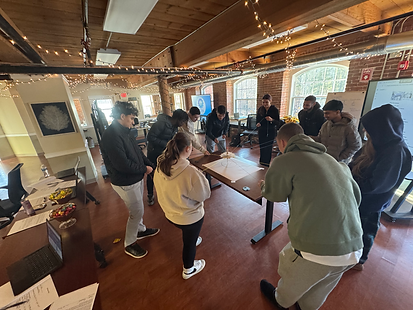
Entering the workplace for the first time can feel overwhelming for many students. Understanding what employers expect, building confidence, and learning how to communicate effectively are essential skills that can shape their success. YouthWorks Signal Success training offers an interactive experience designed to prepare students for these challenges by focusing on career goals, workplace expectations, self-awareness, confidence, and communication. This blog post explores a few elements of this training and shares reflections from students on how these lessons will help them during their upcoming internships.
Setting Goals and Understanding Workplace Expectations
One of the first steps in the YouthWorks Signal Success training is helping students set clear, achievable goals. This process encourages them to think about what they want to accomplish during their internships and beyond. Setting goals gives students a sense of direction and motivation, which is crucial when entering a new environment.
The training also emphasizes understanding workplace expectations. Many students are familiar with the unspoken rules of professional settings, such as punctuality, dress code, and respectful communication. By discussing these expectations openly, the program helps students feel more prepared and less anxious about fitting in.
For example, students learn that showing up on time is not just about being present but also about demonstrating respect for others’ time. They also explore how taking initiative and asking questions can make a positive impression on supervisors. These practical insights help students approach their internships with a clearer understanding of what is expected.
The Importance of Effective Communication for Professional Success
Communication is at the heart of every successful workplace. YouthWorks Signal Success training highlights how clear and respectful communication can open doors and build strong relationships with colleagues and supervisors.
Students practice different communication skills, such as active listening, expressing ideas clearly, and giving and receiving feedback. These exercises show them that communication is not just about talking but also about understanding others and responding thoughtfully.
The training also covers nonverbal communication, including body language and tone of voice. Students learn how these subtle cues can affect how their message is received. For instance, maintaining eye contact and using a confident tone can make their ideas more persuasive.
By focusing on communication, the program equips students with tools to navigate conversations, resolve conflicts, and collaborate effectively. These skills are essential not only for their internships but for any future career path.
Insights from the String Drawing Activity: Teamwork and Communication in Action

One of the most memorable parts of the training is the “string drawing” activity. In this exercise, students work together to recreate a drawing using a device attached to strings 1st without speaking to each other and a second time with open communication and direction. This challenge shows visually how a breakdown in communication can give a breakdown in results but with effective communication and direction each individual succeeded at their part leading to a successful outcome as a team.
This activity highlights how easy it is to misunderstand instructions and why careful listening and clarification are essential skills in both school and the workplace. Students quickly recognize that assumptions even with good intent often lead to mistakes, while checking for understanding is a shared responsibility between employees and employers. The outcomes of the activity demonstrate that mistakes are not failures but indicators of some sort of breakdown, and that adjusting one’s approach can lead to success for both individuals and teams. During the silent team drawing task, students are able to produce a result, but it is often disconnected from the intended outcome. When the activity is repeated with clear instructions, proper use of tools, and open communication among team members, the drawing is completed more accurately and efficiently. By comparing the two attempts, students clearly see that active communication and individual contribution are critical to overall team success, regardless of how big or small their role may seem. The activity reinforces that failure is not always a lack of ability, but often a misunderstanding, and that learning how and when to apply one’s skills within a team leads to growth, collaboration, and continued progress toward shared goals.
Through this hands-on experience, students see firsthand how communication affects teamwork. They learn to value each team member’s input and to adapt their communication style to fit the group’s needs. This insight builds their confidence in working with others and prepares them for real workplace situations where collaboration is essential.
Student Reflections on the Impact of Signal Success Training

Many students who participated in the YouthWorks Signal Success training shared how the lessons have changed their perspective on work and communication. One student mentioned feeling more confident about starting their internship because they now understand what employers expect and how to set personal goals.
Another student reflected on the string drawing activity, saying it taught them to slow down and listen carefully, which they plan to apply when working with their internship team. Several students expressed that learning about nonverbal communication helped them realize how much they can convey without words, encouraging them to be more mindful of their body language.
These reflections show that the training does more than teach skills; it builds self-awareness and confidence. Students leave the program better prepared to face challenges and make the most of their internship experiences.
YouthWorks Signal Success training offers students a valuable foundation for entering the workplace. By focusing on setting goals, understanding expectations, and developing strong communication skills, the program helps students build confidence and self-awareness. Activities like the string drawing exercise provide practical lessons in teamwork and communication that students can carry into their internships and future careers.


See more Youth Workforce Development Success Stories here: Youth Workforce Development Success Stories - MassHire Central Workforce Development Board