


Amber Polisher: Building Pathways, Not Just Careers

How workforce development specialist Amber Polisher shaped her journey through hands-on guidance, workforce programs, and real-world connections.
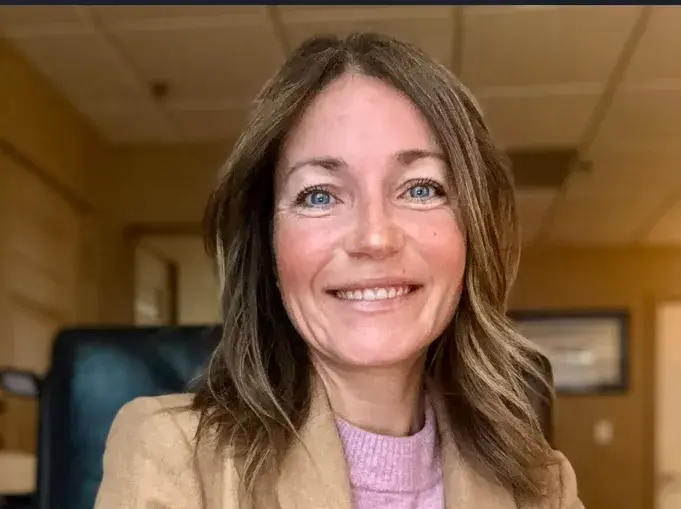
What does it really take to build a clear path from education to a stable career, and who is responsible for creating those opportunities? Behind the scenes, there are professionals working to connect people to jobs in ways most never see. Amber Polisher is one of them. Her work raises important questions about access, equity, and the structure of today’s workforce. How do these systems actually function, and who benefits from them? This article takes a closer look at her journey and the impact of the pathways she helps create.
The Journey
Polisher did not begin her career with a clear plan to enter workforce development. Instead, her path formed over time through experience, exposure, and a growing understanding of how people find meaningful work.
At the start, she imagined a very different future, “In college, I had an internship as a guidance counselor, and really thought that that was sort of where I would land after college.”
But, it is not easy to get a job in the public school system: so, she found a job working as a career counselor at the Shriver Job Corps Center, where she provided case management and support to young adults, 16 to 24, who did not go the traditional route after high school.
That first role became a turning point. Instead of working within a traditional school setting, Polisher found herself supporting students who were often overlooked. These were young people who chose a different path, entering certificate programs and preparing to go directly into the workforce. Through this work, she began to see success in a new way.
She stayed in the Job Corps system for 18 years, growing into leadership roles and gaining a deeper understanding of workforce systems.
“Fast forward 18 years later, I was the manager who oversaw the career counseling department, as well as an introductory career navigation program, and then landed the role of outreach and placement director. So I was in charge of admissions for the state, as well as the placement of our students once they completed our program and tracking them for that year.”
Her long-term involvement allowed her to witness full journeys. She saw where students started, what challenges they faced, and where they ended up after gaining skills and experience. That perspective shaped how she viewed education and career success.
She also began to challenge common assumptions: “I think sometimes, as a society, we place a lot of emphasis and focus on college as being a success indicator. And I had the assumption that this was a program where troubled individuals went, but was quite surprised to find that it was young adults who either tried a semester of college and learned very quickly that it wasn’t for them, or they knew coming out of high school that school was not a strong suit of theirs, and they wanted to work with their hands.”

Over time, her role expanded beyond direct counseling. She started working closely with workforce boards, career centers, and state systems. Through these connections, she discovered a passion for something larger than individual guidance.
Through that position she worked very closely with the Massachusetts workforce development structure, whether it was the career centers or the local workforce investment boards: "And so I kind of found my passion in workforce development and making those connections.”

Today, that passion continues in her current role at the Massachusetts AFL-CIO (which stands for American Federation of Labor and Congress of Industrial Organizations.)
Although she worked for 18 years at Job Corps, her journey shows that careers do not always follow a straight line. Sometimes, they grow through experience, reflection, and a willingness to follow what feels meaningful.
Understanding the Role
Many readers may find themselves asking what a workforce development specialist is, and what do they do. These questions are important, especially since roles like Polisher’s often operate behind the scenes to shape real opportunities for individuals.
At its core, Polisher’s role is about connecting systems that are often separated. She works within the Massachusetts AFL-CIO to support unions and training programs by helping them expand access to careers. She works across organizations to make sure workers can enter and move through different industries.

She also helps develop programs that bring people into union careers. This includes working with apprenticeship programs, training providers, and employers. She ensures these programs are organized in a way that allows individuals to enter at different points depending on their experience and skill level. In simple terms, she helps build the structure that allows someone to start with little experience and grow into a long term career.
Additionally, her work includes coordination. She brings together different partners such as unions, workforce boards, and training institutions. Each of these groups plays a role in preparing someone for work, but they do not always communicate effectively on their own. Polisher helps them stay aligned so that the process feels more connected and easier to follow for the individual.
“A lot of my work is about making sure all of the different pieces are working together. You have training programs, you have unions, you have employers, and you have individuals who are trying to find their way. My role is to help connect all of those pieces so that the path into a career is clear and accessible.”
Another important part of her role is expanding access. She focuses on creating opportunities for people who may not have followed a traditional college path. This includes individuals who are entering the workforce for the first time or those who are looking to change careers. She helps make sure there are options available that match different strengths and interests.
Career Pathways
After understanding her role, it becomes easier to understand the idea of work pathways.
Work pathways are structured routes that guide individuals from education or unemployment into stable careers. They are carefully built systems that connect schools, training programs, and unions so people can move step by step into a job.
Polisher explains that these pathways are being developed across Massachusetts through partnerships between unions, public schools, community colleges, and workforce training organizations. They are often established within vocational high schools, adult education programs, and community-based organizations. In many cases, they are also connected directly to union apprenticeship programs, which allow individuals to earn while they learn.

She points to several examples to make this clearer. Some pathways begin in high schools, where students are introduced to trades through technical education programs. From there, students can transition into pre-apprenticeship programs that prepare them for union entry. Other pathways are designed for adults, especially those looking to change careers or reenter the workforce. These programs provide training, support services, and direct connections to unions.
“We’re building systems where someone doesn’t just take a class and hope for the best. There is a clear next step. You can see where you start, where you go next, and how that leads to a real job,” Polisher explains.
She also highlights that many of these pathways focus on increasing access for underrepresented groups. This includes women, people of color, and individuals from low-income communities. Programs are intentionally placed in communities where access to union careers has historically been limited. This ensures that opportunities are not just available, but also reachable.
“These pathways are not just about training. They are about access and equity. We are bringing these opportunities into communities and making sure people know they belong in these careers,” she says.
In many ways, her role answers a simple but powerful question: how do we make opportunity real for everyone willing to work toward it.
Beyond the Surface
Polisher’s work is constantly moving between places, people, and priorities.
A typical day, she explained, rarely stays in one location or follows a strict routine. Much of her role as a workforce development specialist is spent out in the community, building connections and trying to “connect the dots” between different partners in the workforce system.
One day she might be in Boston, where she is headquartered. The next, she could be in Worcester for a clean energy summit. Later in the week, she might be working from home or planning future meetings, including outreach as far as the Cape and Islands. She described the work as highly mobile and strategic, and she often combines multiple goals into a single trip.

Behind the scenes, however, much of her work is less visible. A major part of it involves supporting individuals facing layoffs, foreclosures, or financial instability. That support often extends beyond standard working hours and relies heavily on relationships she has built over time.
Those connections might mean linking someone to a local food bank, connecting them with English language learning resources, or pulling from past partnerships to find training programs or certifications that fit their situation. She emphasized that this kind of work often happens quietly, outside of formal systems or set schedules.
In her words, working in human services means carrying people’s situations with you even outside of work hours. A resource or opportunity might come to mind late at night, or in passing during another meeting, and then later be passed along to someone who needs it.
Challenges and Change
Polisher pointed to a mix of economic and cultural pressures when describing the biggest challenges facing workers today.
One of the most immediate barriers, she said, is the cost of living. For many working families in Massachusetts, everyday expenses create ongoing strain that shapes both financial stability and long-term planning. “I think the cost of living in our state is a huge barrier that a lot of our working families see,” she explained.
Beyond economics, she also highlighted the broader expectations placed on workers. She described a growing sense of pressure from both society and large employers, where individuals can sometimes feel replaceable rather than valued.

That mindset, she explained, contributes to what she called the “mental load” people manage beyond the workplace itself. It is not only about job demands during working hours, but also the stress and responsibility that continues once people leave work.
When asked about solutions, Polisher emphasized the importance of bringing a stronger human element into the workplace. “If we can place more of a human component in the workplace,” she said, it can change how people experience their jobs.
She explained that when employers invest in their workers as individuals, it can shift how people view their roles. Instead of feeling interchangeable, “it helps someone feel like they’re a part of something bigger,” she said.
That sense of connection, she said, can improve retention and encourage workers to grow within their companies. It also builds a stronger relationship between employees and the work they are doing.
On the upside, she pointed to Massachusetts as an example of strong coordination between key groups like unions, schools, employers, and government. She described the state’s workforce infrastructure as “top notch” and even “a model for other states across the country.”

She also emphasized that labor has a formal seat at the table through state and regional workforce boards which ensures that union voices are represented in decision-making. Combined with strong education systems that are closely tied to workforce development efforts, she said these partnerships help create a more connected and effective ecosystem across the state.
Looking Ahead
As the conversation wrapped up, Polisher reflected on the qualities that matter most for anyone interested in a similar path. For her, the foundation starts with compassion and empathy. In work that often deals directly with people’s lives and challenges, she emphasized the importance of being able to truly understand and connect with others.
She also pointed to communication as a key skill, along with a strong sense of boundaries. Knowing what you can and cannot take on, and understanding when to rely on others, is essential in a field that can feel emotionally heavy at times.
As she put it, “there is only so much that one person can do.” That awareness, paired with strong relationships and a clear understanding of available resources, helps sustain people working in human services over time.
In closing, Polisher’s message reflected the heart of her work: stay grounded, stay connected, and never lose sight of the people behind the systems.


Comments